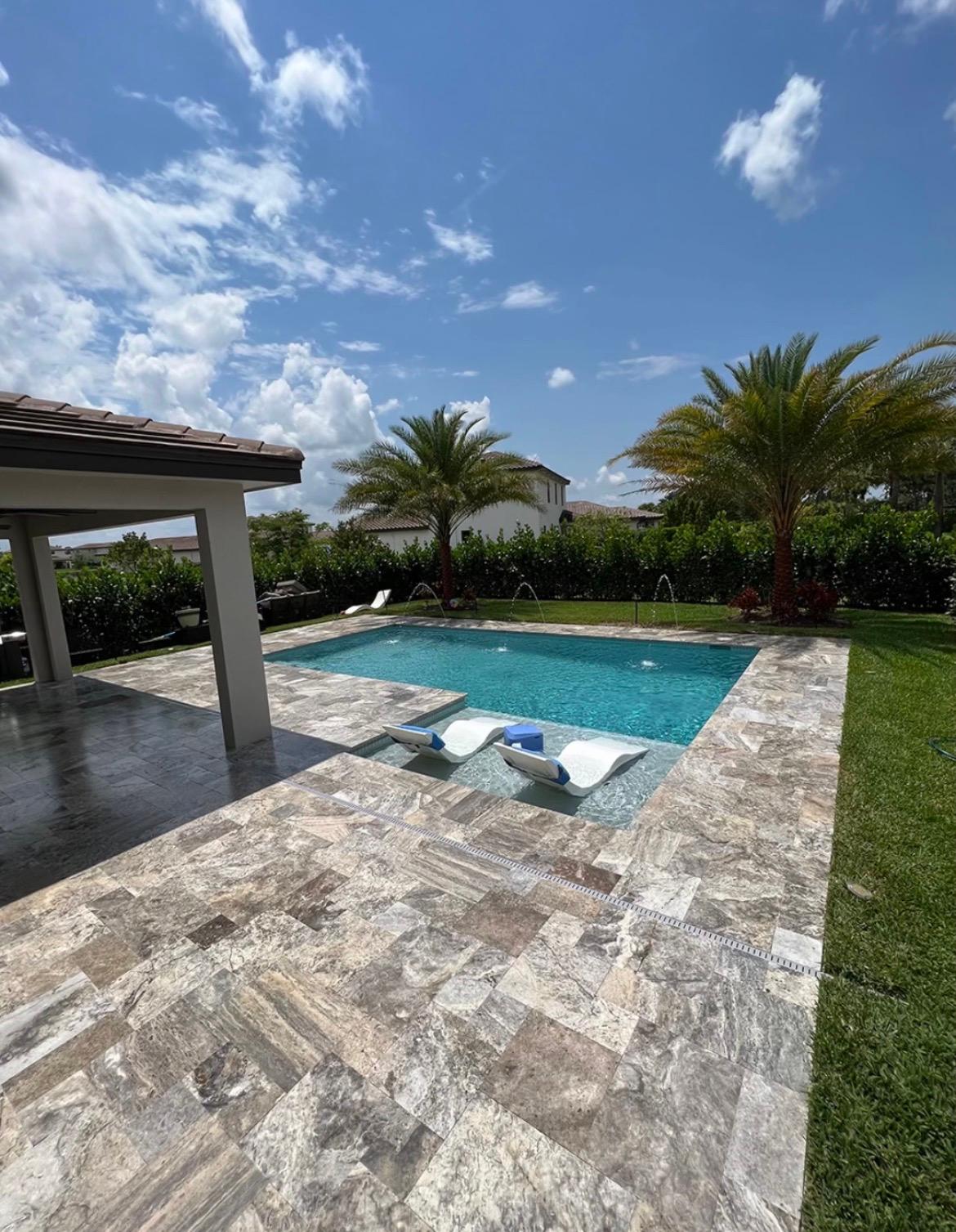
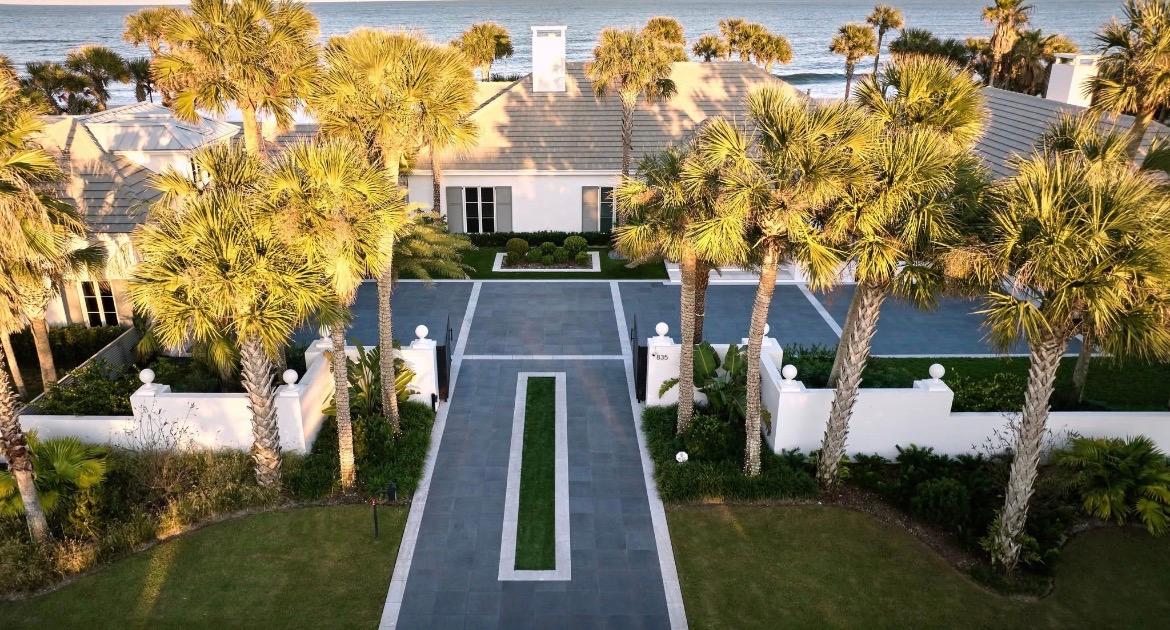
A single well-placed specimen palm changes a landscape more than a dozen smaller plants can. The right trunk, right scale, right placement — a mature Medjool framing an entry drive, a cluster of Sylvesters anchoring a courtyard corner, a Zahidi marking the end of a sightline — these establish tropical character instantly rather than waiting years for a landscape to grow in.
Our specimen palm work covers the full chain: species guidance for the space, specimen walk-through at the grower where logistics allow, delivery coordination (large palms are a planned operation, not a surprise), installation at correct depth, proper bracing without trunk damage, and real establishment care through the first critical months. We'll walk a candidate specimen with you at the grower before purchase when possible so you're approving the actual tree, not a stock photo.
Species selection matters more than most owners realize. Medjool palms deliver massive scale, formal character, and the signature Palm Beach look — expensive, dramatic, right for grand entries and estate-scale properties. Sylvester palms (Phoenix sylvestris) give you the diamond-cut trunk at a lower price point than Canary Island Date — stately, versatile, works at a wider range of property scales. Zahidi palms produce fruit and read more casual, suiting courtyards and informal landscapes. Each has its right application and we match species to the design, not the other way around.
Installation technique is where most palm failures start. The root initiation zone — the slight flare at the top of the root ball — must stay level with grade or sit one to two inches above it. Burying the flare traps moisture against the trunk and invites rot pathogens that kill palms slowly over the first year or two. We dig the hole two to three times the width of the root ball but no deeper than the ball itself, and we avoid rich organic amendment in the backfill because it creates a bathtub effect in Florida's sandy subgrade.
Bracing is the other common failure point. Tall palms need six to twelve months of mechanical support against wind-rock, but screws or nails driven into the trunk create permanent wounds that invite the same pathogens. We use the padded 2x4 method: burlap or felt wrapped on the trunk, short wooden blocks banded around the padding with steel straps, then the support timbers nailed into those blocks — never into the palm itself.
Establishment watering runs six to eight months. A three to four inch soil berm around the perimeter of the root ball retains deep watering; in sandy Treasure Coast soils we water deeply two to three times per week during the first few months, tapering as roots establish. Daily light sprinkling is the wrong answer — it builds shallow, drought-prone roots and masks establishment problems.