Treasure Coast · Palm City, FL
Drainage, Grading & Irrigation
Yard drainage, regrading, and irrigation planning across Palm City, Stuart, and the Treasure Coast — three disciplines treated as one connected problem, not isolated fixes.
Overview
What this service is, and who it's for.
Drainage, grading, and irrigation are usually three separate conversations on most contracts. On a Treasure Coast property they're one problem: how water enters the lot (irrigation and rain), how it moves across the lot (grading), and how it leaves the lot (drainage). If any one of those three is off, the lawn, beds, and foundation start paying the price within a season or two.
Florida building code calls for the ground to slope away from your foundation at a minimum 2% (roughly 1/4 inch per foot) for the first 10 feet, and for general yard areas to carry at least a 1% slope toward designated drainage features. Swales — the shallow channels running between lots — should hold at least a 0.5% longitudinal slope. On a lot of the properties we walk, one or more of those numbers has drifted over the years, and that's where the standing water starts.
The common failure pattern we see is a yard that's been drainage-fixed in isolation — a trench here, a basin there — without ever addressing the grade that's directing water to the problem spot in the first place. The right order of operations is usually: watch the lot during or after rain, identify how water is actually moving, correct the grade where it's working against the landscape, then specify drainage improvements that redirect water away from problem areas to an acceptable discharge point.
Downspouts are the single most common fix we recommend. Water dumping right at the foundation, running onto the lawn, or disappearing into a corroded underground pipe destroys more Florida landscapes than any other single factor. Extending downspouts at least six feet from the foundation — or piping them to a proper surface discharge or dry well — solves half the drainage calls we take.
Irrigation then layers on top of a properly graded, drained lot. Zone layout, head placement, controller programming — these decisions make a lot more sense once the lot is behaving the way it should. On larger problem lots we scope all three together with dedicated depth for irrigation and heavier earthwork handled by our in-house skid-steer.
What's Included
Concrete scope — not vague promises.
- Site walk during or shortly after a rain event where possible
- Grade assessment and surface regrading to code-minimum slope
- Surface drainage improvements that redirect water from problem areas
- Downspout extensions and tie-ins to a proper discharge path
- Lawn regrading away from foundation lines
- Swale restoration where neighborhood drainage has silted or filled
- Coordination with irrigation zone layout and head placement
- Heavier earthwork handled by in-house skid-steer
- Sod reinstatement after trenching and regrading
- Post-install watch-and-adjust after the next rain event
Before You Call
Watch your yard before the drainage call.
A quick look you can do yourself — no tools or digging. It makes the first visit faster and more useful.
- 01Walk the yard during a hard rain if you can. Note the two or three spots where water pools first — those are your priority zones.
- 02Check how long water stands after rain stops. Anything draining within 24 hours is usually a grade conversation; standing water 48 to 72 hours in points toward subsurface drainage work.
- 03Walk every downspout. Water should discharge at least six feet from the foundation. If it's dumping right at the wall or into a pipe you don't know the exit of, flag it.
- 04Look at the soil along the foundation. Dark, wet, or settled soil within a foot of the wall usually means grade has drifted negative — a top-priority fix.
- 05Check the swale between lots. Grass noticeably taller or dead in a line usually means water is sitting rather than flowing.
- 06Note any corner where mulch keeps washing out, or beds where you've lost plants from root rot. Both are drainage symptoms, not plant symptoms.
Our Process
How a drainage, grading & irrigation project runs.
- 01
Site walk & diagnosis
We walk the yard, map where water ponds, understand elevations and downspout paths, and figure out what the lot is actually doing versus what you think it's doing. Where feasible we schedule the walk during or just after a rain event.
- 02
Design & scope
We draft the plan — grade corrections, surface drainage components, discharge path, downspout tie-ins, and any irrigation adjustments that need to coordinate.
- 03
Install
Earthwork, grade shaping, drainage install, sod reinstatement, and any irrigation work scheduled around it. Heavier excavation runs through our in-house skid-steer so timing stays tight.
- 04
Observation
After the next significant rain we check the install, confirm flow, and adjust anything that didn't behave as expected.
Related Projects
A look at the work.
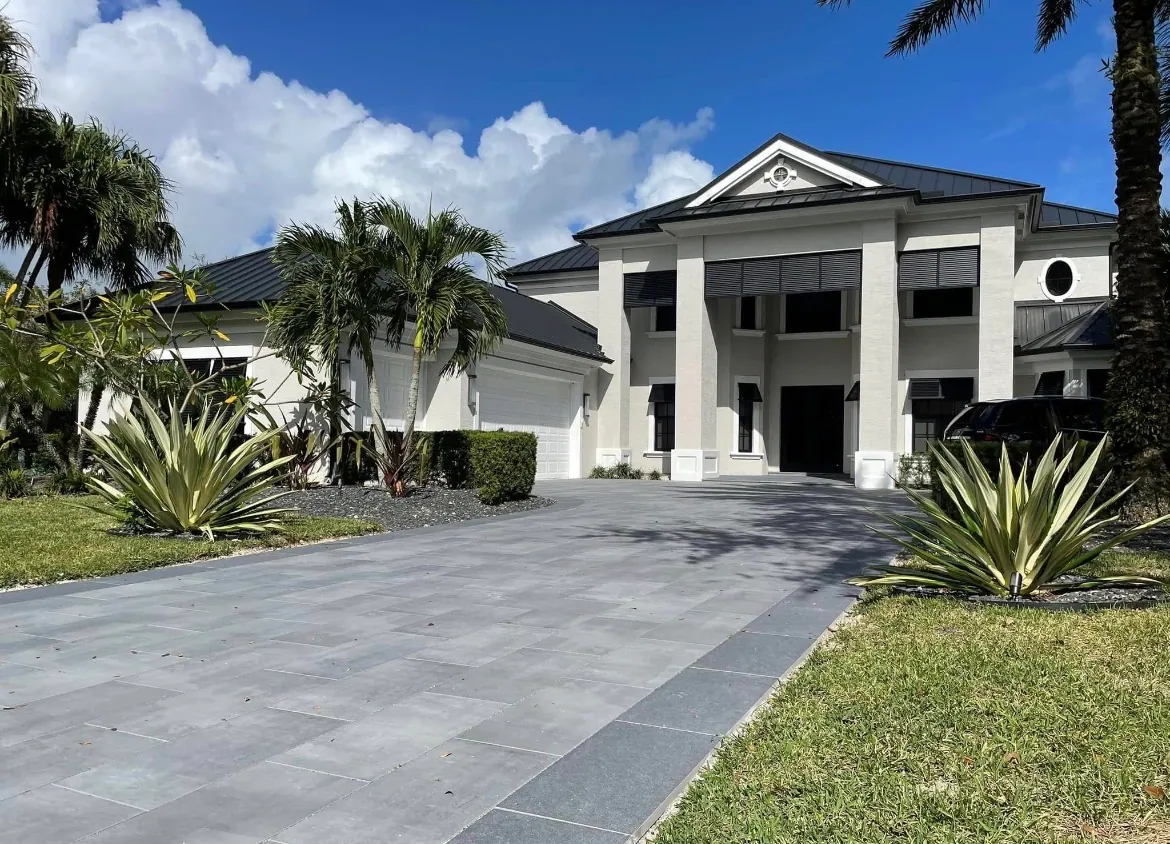
Service Areas
Drainage, Grading & Irrigation across the Treasure Coast.
FAQ
Questions buyers actually ask.
Usually one of three things: downspouts dumping water right at the foundation, a low spot with no outlet, or a swale/grade that's lost its slope over the years. On a site walk we can diagnose which it is for your yard and scope the right fix — grading, drainage, or both.
Grading shapes the surface so water flows where you want it. Drainage is the components that collect and redirect water — basins, pipe, outlets. Irrigation is the system that delivers water for plants and lawn. They interact constantly, which is why they belong in the same conversation on a problem property.
Water pooling for less than 24 hours after a hard rain is usually a surface problem solvable through regrading or downspout work. Standing water that lingers 48 to 72 hours after rain stops often indicates a subsurface issue that needs attention beyond simple surface fixes. Either way, the earlier we look, the cheaper the fix.
Minor regrading and downspout extensions typically don't. Significant regrading, altering established neighborhood drainage patterns, or tying into municipal stormwater systems typically does — and sometimes requires engineered plans. We identify what applies to your project before quoting and coordinate with the appropriate agency when required.
Trenches and basin installs get backfilled and resodded or seeded, depending on scope. On well-executed drainage work the trench is barely visible within a few weeks of install. We fold sod reinstatement into the scope so you aren't juggling a separate sod install.
Yes, if the existing system has capacity and is actually functioning. On older properties we sometimes find a drainage system that's been clogged or disconnected for years without the owner realizing — we'll inspect it and either restore or replace it rather than add new pipe to a dead line.
That's usually the smart approach. Zone layout changes when beds change. Head placement changes when grade changes. Spending to fix one without the other is how properties end up back on a service call six months later. For a problem lot, we scope the full picture.
Related Services
Pairs well with.
Irrigation & Water Management
Efficient irrigation design, installation, repair, and smart programming — tuned for Florida water restrictions and the way your landscape actually drinks.
Skid-Steer / Bobcat Work
In-house skid-steer and compact machinery for grading, demolition, hauling, trenching, and heavy prep — the muscle behind every larger project.
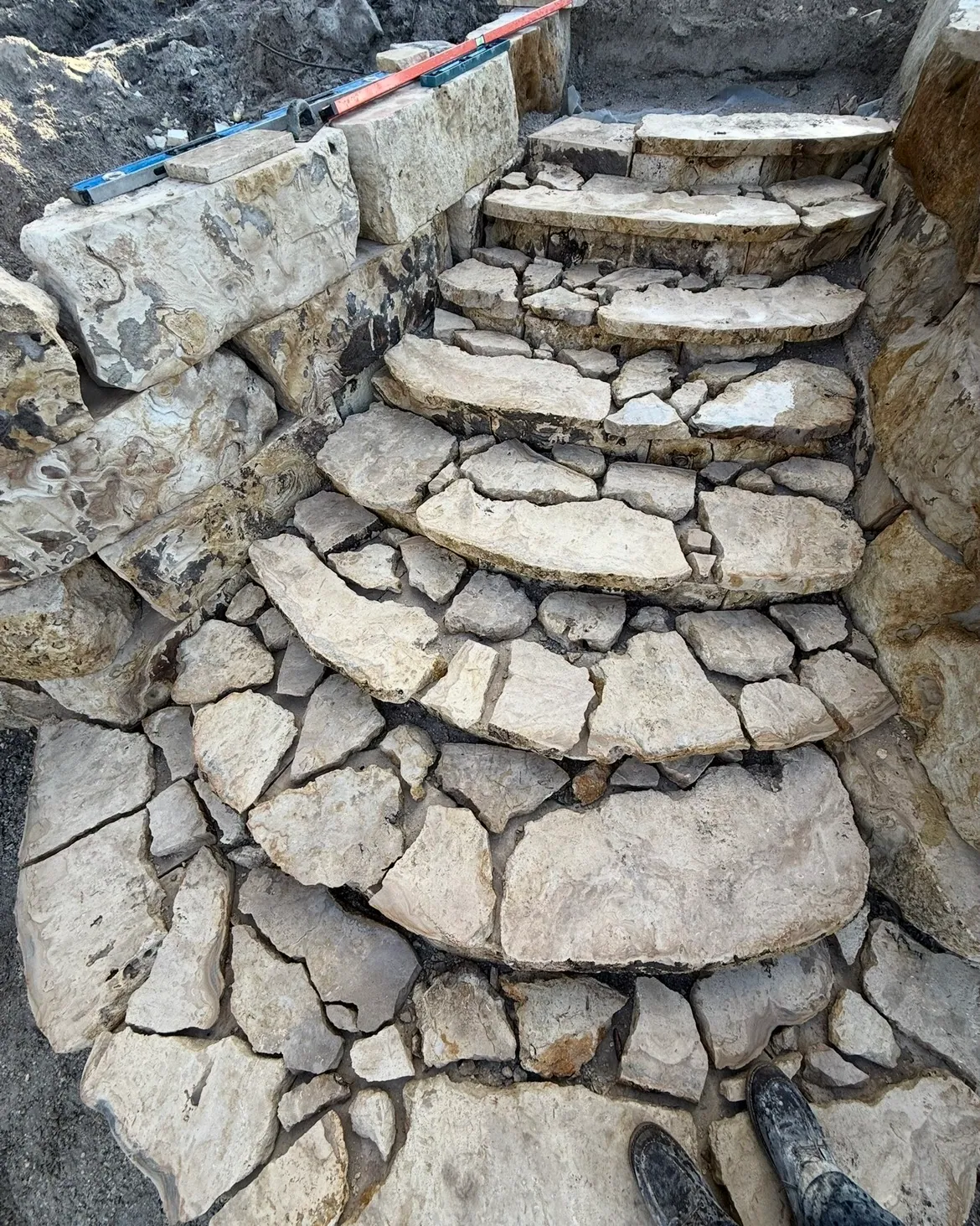
Landscape Renovations & Outdoor Transformations
Full outdoor transformations — demolishing the parts that aren't working, keeping what should stay, and rebuilding the landscape as one cohesive space.
Get Estimate
Ready to scope your drainage, grading & irrigation project?
Share a few details and we'll follow up to walk the property and put together a clear plan.