Jensen Beach spans two coastal environments that behave very differently. Properties on the barrier island sit between the Atlantic to the east and the Indian River Lagoon to the west, with full salt and wind exposure from both sides on most lots. Plant selection on the island is not a style preference — anything that can't survive sustained salt wind will fail inside a season or two. We work from a short list of coastal-tolerant species that have proven out across years of installs in equivalent conditions.
The mainland side of Jensen Beach — along Indian River Drive and the inland residential neighborhoods — plays by different rules. Mangrove-protected shoreline sections, estate lots with mature trees set back from the water, and HOA-governed inland communities each want different plant choices and drainage approaches. Mangrove protection applies to any work within the regulated setback from the lagoon; we scope landscape work to stay outside that line rather than disturb protected growth.
Across both sides, Florida coastal landscape studies consistently reach the same conclusion on what actually survives: sea grape, cocoplum, buttonwood, saw palmetto, cabbage palm, beach sunflower, railroad vine, native muhly grass, and sea oats on the dune line itself. UF/IFAS and Florida native plant resources all converge on roughly that palette for high-exposure coastal residential — because the list is short on purpose. Everything beyond it is a coin flip in year two.
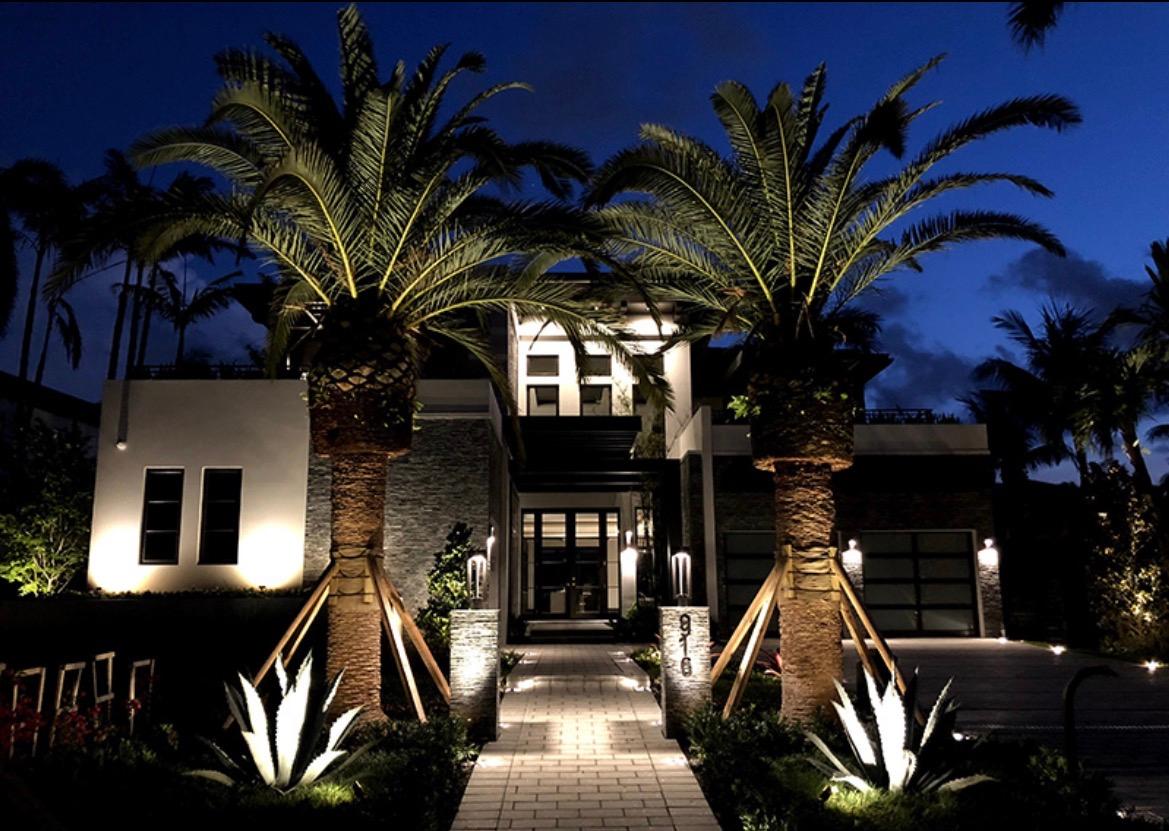
Wind also stresses what wasn't planted for a coastal yard. Specimen tree placement, hardscape wall orientation, and lighting fixture selection all take sustained wind into account on serious coastal work here. Lighting fixtures with aluminum housings corrode visibly within a couple of years in direct salt air — brass or 316 stainless costs more upfront and lasts a decade longer.